Hastings has expanded steadily since its post-1931 earthquake reconstruction, pushing development beyond the original gravel ridges of the Heretaunga Plains into zones where the unconfined aquifer sits just a few metres below ground level. What used to be orchard land is now medium-density housing and light industrial warehousing—and with that comes a sharper need to characterise how water moves through the subsurface. In our experience, a desk-study permeability value borrowed from a regional map rarely holds up once you encounter interbedded silt lenses or old river channel deposits. The CPT testing can flag pore pressure anomalies during penetration, but when the brief demands a defensible hydraulic conductivity figure for dewatering design or cutoff wall specification, the field permeability test in Hastings is the tool that project consent authorities actually want to see. We run both the Lefranc method in soil and the Lugeon test in rock, depending on what the borehole log reveals, and the results feed directly into NZS 3404 and the groundwater sections of the regional consent package.
A single Lugeon test run across a suspect fracture zone often saves more in unnecessary grout than the entire site investigation budget.
Technical details of the service in Hastings
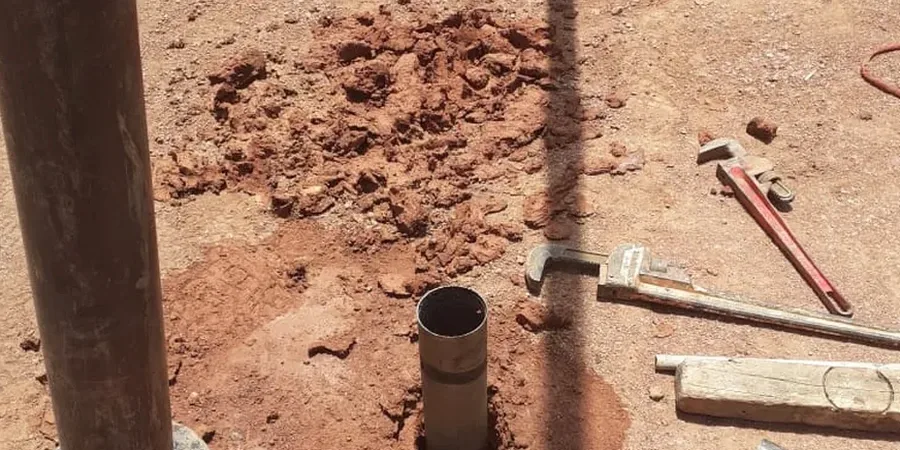
Risks and considerations in Hastings
We reviewed a project where a stormwater infiltration basin in Hastings was sized using a permeability estimate from a single SPT split-spoon sample. Within six months of commissioning, the basin was holding water like a pond—the design hadn't accounted for a continuous silt seam at 4.5 m depth that acted as a hydraulic barrier. The retrofit involved drilling five Lefranc test intervals across the basin footprint, which revealed a two-orders-of-magnitude drop in conductivity at that horizon. When a site sits near the interface between the alluvial gravels and the Havelock North loess-derived soils, ignoring in-situ permeability data can turn a straightforward drainage feature into a long-term maintenance headache. We've seen similar issues with retaining wall drainage behind anchored retaining walls where the backfill permeability wasn't field-verified—the walls survived structurally, but the water staining and efflorescence told a different story.
Our services
Our Hastings field permeability testing program is built around the specific geological conditions of the Heretaunga Plains and the surrounding hill country. Every test is supervised by a senior technician who understands the local hydrogeology.
Lefranc Variable-Head Testing
Bail-down and slug-in tests performed in standpipe piezometers or open boreholes in soil, processed using Hvorslev or Bouwer-Rice methods to yield a reliable k value for each isolated interval.
Lugeon Packer Testing in Rock
Single and double packer configurations for determining fracture-controlled permeability in the Pliocene mudstone and limestone that underpin much of Hastings. Full five-stage pressure cycle with flow monitoring.
Pumping Test Design and Supervision
Constant-rate aquifer tests with observation well networks to derive transmissivity and storativity for dewatering system design on larger commercial sites.
Permeability Profiling for Dam and Levee Projects
Multi-depth Lugeon testing along the proposed grout curtain alignment, feeding into the NZSOLD dam safety framework and informing the grouting specification.
Questions and answers
What does a Lefranc or Lugeon test cost on a typical Hastings site?
For a single test interval within an existing borehole, costs generally range from NZ$930 to NZ$1,940 depending on depth, access, and whether a packer system or a simple falling-head setup is used. A full day of multi-level testing with reporting will sit at the upper end of that range or slightly above.
When should I specify a Lugeon test instead of a Lefranc test?
The Lugeon test is designed for rock—specifically to evaluate fracture permeability under controlled pressure stages. If your borehole encounters the Pliocene mudstone or any cemented conglomerate layer typical of the Hastings subsurface, a Lugeon test gives you the joint hydraulic behaviour that a soil-focused Lefranc test cannot capture.
How long does the test take and when do I get results?
A single Lefranc test typically requires 40 to 90 minutes depending on soil type; a full Lugeon cycle with five pressure stages can take up to two hours. We issue preliminary k values and pressure-flow plots within 48 hours of site work, followed by the full interpreted report inside five working days.