In Hastings, the ground beneath your project can change completely within a few hundred metres. You might be working with stiff gravels out toward Bridge Pa, and then hit soft, moisture-sensitive silts closer to the city centre, especially where the old Ngaruroro River channels have left their mark. These contrasts mean you cannot rely on generic soil assumptions when designing footings or retaining structures. A proper triaxial test gives you the effective stress parameters—c' and φ'—that index testing simply cannot provide. For projects across the Heretaunga Plains, where the water table often sits just a couple of metres down and post-cyclone drainage is an ongoing conversation, we run consolidated undrained (CU) and consolidated drained (CD) triaxial setups to match your drainage conditions. When we need to pin down stiffness at very small strains, we often combine the triaxial data with CPT testing to build a full ground model that holds up under peer review.
A single CU triaxial test with pore pressure measurement tells you more about how Hastings silts will behave under load than a dozen SPT blows ever could.
Technical details of the service in Hastings
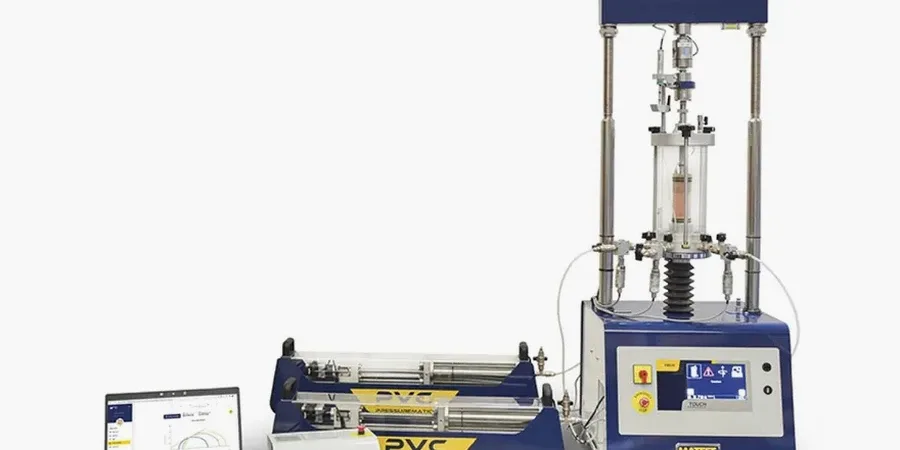
Risks and considerations in Hastings
Hastings sits at roughly 14 metres above sea level on the Heretaunga Plains, and the 1931 Hawke's Bay earthquake—magnitude 7.8—remains a defining event for anyone designing foundations here. Liquefaction susceptibility maps published by the Hawke's Bay Regional Council show significant zones across the plains where loose silty sands and fine sands could lose strength under seismic shaking. Triaxial testing is the only laboratory method that lets you measure the cyclic strength of these materials directly. A cyclic triaxial program, run at confining pressures matching your in-situ effective stress, gives you the cyclic resistance ratio (CRR) you need to compare against the CSR from your seismic hazard assessment. Skip this step and you are essentially guessing whether your site will liquefy—a gamble that makes no sense given the council's consent requirements now routinely request site-specific liquefaction analysis under NZS 1170.5. Even outside mapped liquefaction zones, the soft alluvial clays along old stream beds can generate excess pore pressure under earthquake loading, reducing the effective friction angle mid-shake, and only a CU triaxial test with cyclic loading can quantify that degradation with any confidence.
Our services
The triaxial test is rarely run in isolation; it feeds into a broader geotechnical investigation that shapes foundation decisions. For Hastings projects, we typically pair triaxial strength data with a few complementary services to build a defensible ground model.
Triaxial Test (CU, CD, UU)
Full triaxial program including specimen extrusion, saturation monitoring, consolidation at in-situ stress, and shearing at controlled strain rates. Outputs include Mohr-Coulomb envelopes, p'-q stress paths, and secant modulus values for input into PLAXIS or FLAC models.
CPT and SPT Drilling for Sample Recovery
We operate CPT rigs and track-mounted SPT drilling equipment across Hawke's Bay to recover the undisturbed tube samples that our triaxial lab requires. Without high-quality tube samples, even the best triaxial equipment will give you unreliable numbers.
Consolidation and Permeability Testing
Oedometer consolidation tests and falling-head permeability runs on the same soil units tested in triaxial, giving you the full set of stiffness and drainage parameters needed for settlement analysis under the foundation loads expected in Hastings commercial and residential builds.
Questions and answers
What does a triaxial test cost for a Hastings project?
For a standard single-stage CU or CD triaxial test, budget between NZ$3,530 and NZ$4,300 per specimen, depending on the confining stress levels and whether we need to run a multi-stage sequence on the same sample. This covers specimen preparation, back-pressure saturation, consolidation, shear, and a full report with Mohr-Coulomb parameters. Multi-stage tests can reduce the total number of specimens needed, which often brings the overall testing cost down when you need strength parameters at several confining pressures.
What is the difference between a CU and a CD triaxial test?
A CU (consolidated undrained) test allows pore pressure to build up during shear and we measure it continuously, which gives you both total and effective stress strength parameters from one test. A CD (consolidated drained) test is sheared slowly enough that pore pressures dissipate, so the effective stress path is controlled directly. For Hastings silts that drain moderately fast, CU with pore pressure measurement is usually the practical choice; CD tests on these materials can run for several days and are reserved for long-term drained loading scenarios like permanent embankments.
How long does it take to get triaxial test results?
A standard CU triaxial test on a cohesive silt from Hastings typically takes 5 to 7 working days from specimen setup to final report. CD tests on low-permeability soils can stretch to 10 days or more because of the slow strain rates required. We always provide preliminary parameters as soon as the shear stage is complete if your design team is working to a tight consent submission deadline.
Do I really need triaxial testing or can I use SPT N-values instead?
SPT N-values give you an index of relative density or consistency, but they cannot replace triaxial testing when you need effective stress strength parameters for finite element analysis or slope stability modelling. In Hastings, particularly on sites with variable loess and alluvial deposits, correlations between N-value and φ' can be off by 5 degrees or more—which translates to a factor of safety difference that can make or break a retaining wall design. If your project requires a resource consent with geotechnical peer review, expect the reviewer to ask for triaxial test data.