A four-story apartment block planned for a tight Heretaunga Street site hit a snag last year. Initial boreholes showed stiff gravels, but the eastern corner sat over an old, filled stream channel. The developer had already committed to a piled foundation, but the variable ground meant the pile design needed to be site-specific. A thorough soil mechanics study became the critical path item. We see this pattern across Hastings: the Heretaunga Plains look uniform, but the subsurface tells a different story. Between the braided river deposits of the Ngaruroro and Tukituki, you encounter lenses of silt, peat, and pumice sands that behave very differently under load. Our team provides that layer of certainty. We combine deep local knowledge with laboratory testing to define the engineering properties of the ground. When the data is clear, the structural design falls into place without costly over-engineering or, worse, post-construction settlement. To build the full picture of a site, we often pair the soil mechanics study with an in-situ permeability test because drainage characteristics in Hastings silts can govern both foundation performance and stormwater design.
In Hastings, a soil mechanics study turns the variability of the Heretaunga Plains into a set of numbers an engineer can design against.
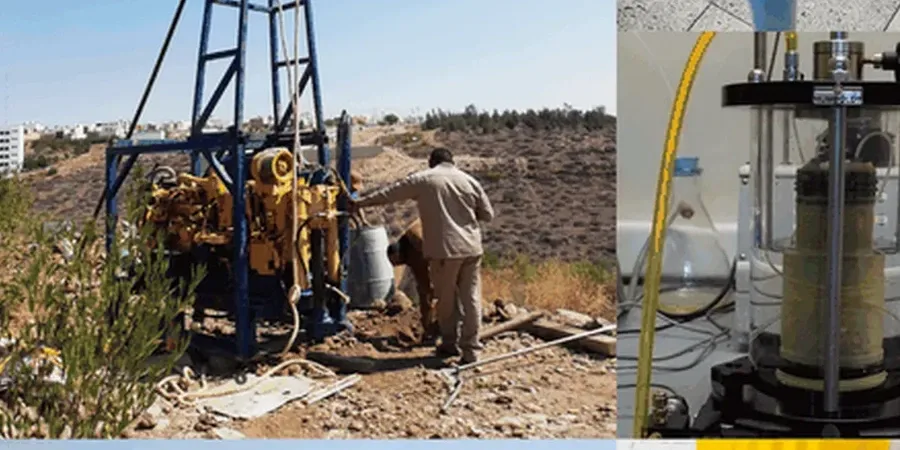
Technical details of the service in Hastings
Risks and considerations in Hastings
Hastings grew fast after the 1931 earthquake, but much of that expansion happened before modern geotechnical standards existed. The city spread south and east onto land that had been swamp or seasonal wetland. Those areas are now under light industrial buildings and older housing stock. When a new owner wants to redevelop, the soil mechanics study often reveals compressible organic silts at depth. The most common failure mode we see isn't catastrophic collapse; it's long-term differential settlement that cracks slabs and binds doors. The 1931 Hawke’s Bay quake also proved that saturated fine sands and silts across the plains are susceptible to liquefaction. A site-specific study is the only way to decide whether ground improvement, like stone columns, is needed to densify the profile before construction. Ignoring the historical geology here isn't a calculated risk; it's a direct path to remedial work that costs far more than the original investigation.
Our services
Our Hastings soil mechanics study is a complete package, from site investigation to interpretive report. We don't just hand over a set of lab results; we deliver a geotechnical model that your structural engineer can use immediately.
Advanced Laboratory Testing
Triaxial compression, direct shear, and oedometer consolidation tests run in our IANZ-accredited facility. We measure the parameters that matter: effective stress strength, compressibility, and permeability of the silts, sands, and gravels typical of Hastings.
Foundation Design Parameters
We provide bearing capacity, settlement predictions, and liquefaction assessment specific to your Hastings site. The report includes recommendations for shallow footings, rafts, or deep foundations based on the measured soil mechanics properties.
Questions and answers
How much does a soil mechanics study cost in Hastings?
For a residential or light commercial site in Hastings, a soil mechanics study typically ranges from NZ$5,500 to NZ$7,920. The final cost depends on the number of boreholes, depth of investigation, and the specific lab tests required. A site with deep soft silts needing consolidation testing will be at the higher end.
What is the difference between a soil investigation and a soil mechanics study?
A soil investigation logs what the ground looks like. A soil mechanics study measures how the ground behaves. It gives you the strength, stiffness, and drainage parameters needed for design. For a Hastings building consent on variable ground, the council expects the full mechanics study.
How long does the testing phase take?
Standard strength and consolidation tests run for 7 to 10 working days after sampling. If we need to determine long-term secondary compression for highly organic silts, that can extend the program. We always align the schedule with your project milestones.
Do I need a soil mechanics study for a simple residential build?
Yes, especially in Hastings. NZS 3604:2011 may cover good ground, but large parts of the city are on variable alluvial soils or have a moderate liquefaction hazard. A targeted study confirms if you can use standard foundation details or if you need specific engineering design.